

Ten years ago, mass bird deaths due to bird flu were still an unknown phenomenon in the Netherlands, but nowadays we are regularly confronted with outbreaks of this disease among wild birds. In recent weeks, things have been seriously bad again. After images reached us from Germany of large numbers of sick and dead cranes, the number of cases of highly pathogenic avian influenza (HPAI) among waterbirds has also risen sharply in our country. Once again, we are dealing with a variant of the H5N1 virus, genetically related to the virus that first emerged in poultry in China in the 1990s. Bird influenza is a zoonosis and can be transmitted to humans and pets. If you find dead waterbirds, do not touch them with your bare hands and please report it!
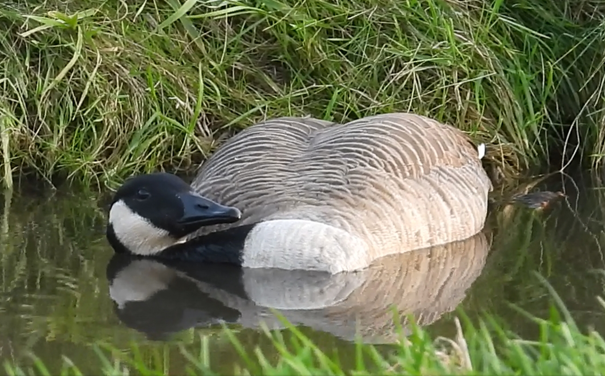
Research on dead wild birds has shown that the H5N1 virus has spread across a large part of the Netherlands since early October and is present in a significant number of bird species. Between October 1 and November 15, the Dutch Wildlife Health Centre (DWHC) sent more than 200 dead birds to Wageningen Bioveterinary Research (WBVR) for testing on bird flu. Of the approximately 140 birds for which results have now been received, just over half tested positive. Among those were relatively many Mute swans, Greylag geese, Barnacle geese, Canada geese, Shelducks, Eurasian wigeons, Common teals, and Common buzzards. The outbreak caused increased mortality in several bird species. In many cases, multiple dead birds are found at the same location, but increasingly, we are receiving reports of just one or a few dead birds per location. Research on live wild birds by Erasmus MC revealed that the virus was widely circulating among apparently healthy Mallards and other dabbling ducks during the same period.
The current outbreak spells further bad news for several species. One species for which this is certainly true is the Peregrine Falcon. In 2016-2017 and 2020-2023, years of major outbreaks of the HPAI H5 virus, there were significant mortality rates among both adult and immature Peregrine Falcons. The numbers of wintering and breeding Peregrine Falcons in the Netherlands declined during this period, with the sharpest declines immediately following the years with outbreaks. The viruses detected in Peregrine Falcons turned out to be genetically closely related to viruses circulating simultaneously in their prey. Researchers have previously raised the alarm about this. The chance of recovery from the current outbreak seems slim for the time being. Due to their food choices, Peregrine Falcons—and likely several other predators and scavengers as well—are at high risk of becoming infected with avian influenza in any outbreak.
Being alert to bird mortality is important and provides valuable knowledge and timely signals about what’s happening in nature. We therefore greatly appreciate every report. Generally, you might be more inclined to report a bird when you find a unique bird, but remember that common species are just as important. Reports from anywhere in the Netherlands are welcome.
Would you like to report a bird and is your find potentially suitable for research into the cause of death? Please contact us using our online form.
Would you like to monitor bird mortality more systematically during bird counts? Then you can participate in Sovon’s Live Atlas project.
If there is an initial suspicion of bird flu circulating in wild birds, it is important for the DWHC to gather comprehensive field data on the virus’s presence. To do this, several wild birds are tested during the initial phase of a bird flu outbreak. These birds are selected based on the history provided by the reporter (e.g., any clinical symptoms at the time of the sighting), the bird species, and the date and location where the animal was found. When a bird flu outbreak is confirmed, priority is given to bird species of particular concern and to birds originating from locations where the virus has not yet been detected. Unfortunately, it is not possible to test all reported wild birds. However, every report of a dead wild bird is still very useful for mapping the outbreak’s trend.