

Within the current West Nile virus (WNV) outbreak, there have now been 27 positive results regarding dead wild birds. These mainly concern corvids (jackdaws, crows, and magpies), but a positive bird of prey, a goshawk, has also been found.
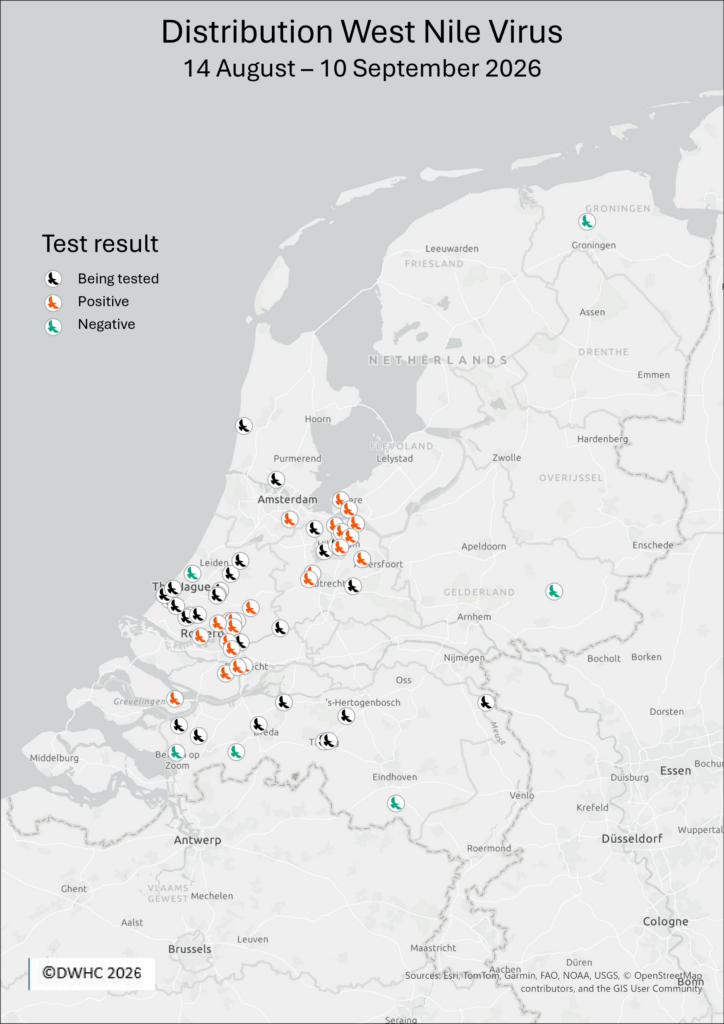
Distribution map of West Nile virus results among dead wild birds in the Netherlands between August 14 and September 10, 2026.
An overview of the current confirmed numbers of West Nile virus infections in humans, horses, birds, and mosquitoes can be found on the RIVM website.
Help map the outbreak: keep reporting
We are currently interested in birds from areas where WNV has not yet been confirmed. At the same time, we want to continue monitoring the increased mortality in areas where WNV has already been detected. Therefore, please continue reporting in known areas as well, so that we can monitor the situation effectively. As we have an idea of the outbreak in certain areas, we are currently focusing primarily on previously unknown areas when accepting dead birds for research.
What should you look out for when working with (wild) birds?
At the moment, mortality among corvids, such as crows, jackdaws, and magpies, is particularly noticeable. Other bird species can also become infected.
Birds infected with West Nile virus may show the following symptoms:
- weakness or lethargy;
- severe weight loss;
- reduced responsiveness to the environment;
- staggering or uncoordinated movement;
- problems with standing, walking, or flying;
- tremors or abnormal movements of the head or neck;
- other neurological symptoms;
- sudden death.
The symptoms can vary greatly. For example, a bird may still be able to fly but be clearly less alert or uncoordinated. There is no specific treatment for WNV. Treatment consists of supportive care. Birds with neurological symptoms can also recover, but the prognosis is less favorable in cases of severe neurological complaints.