

After a long winter in which bird flu once again circulated on a large scale among wild birds in and around the Netherlands, spring has now arrived. This means that many overwintering waterfowl are making way for returning summer visitors. Will bird flu outbreaks soon decline as a result, or should we fear another dramatic breeding season for a number of colony birds? In this news report, we look back at the past few months and paint a picture of previous springs in which highly pathogenic H5 viruses persisted for a long time.
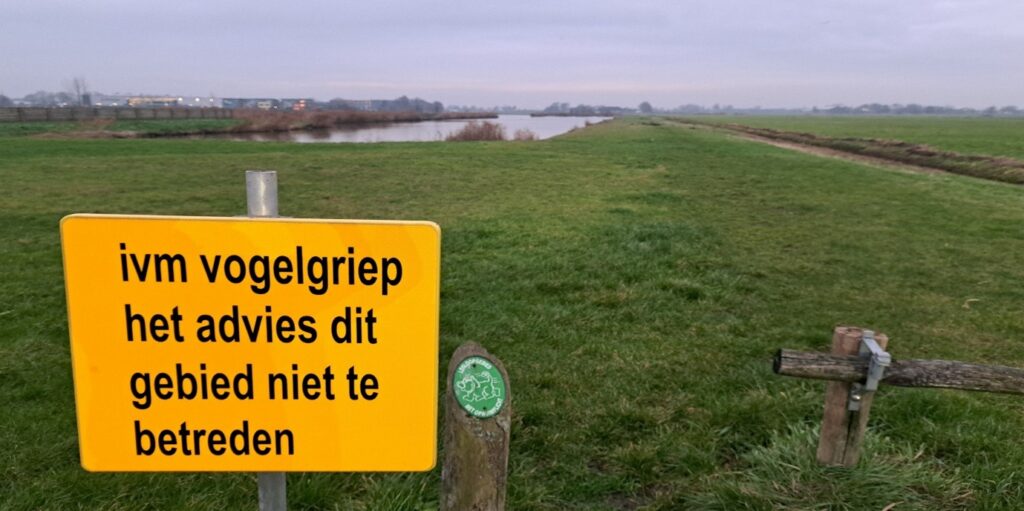
That a new wave of avian influenza infections among wild birds was looming after the summer of 2025 became clear in October, partly due to alarming reports from Germany, where large numbers of Cranes were dying at the time. The first outbreak among poultry in the Netherlands was confirmed on October 6 in the municipality of Aa en Hunze in the province of Drenthe. Ten days later, the Ministry of Agriculture, Fisheries, Food Security and Nature (LVVN) imposed a nationwide obligation to house and shield captive birds. Nevertheless, by the end of March, more than 40 poultry farms and 10 other locations with captive birds had become infected. The epicenter was in the provinces of Gelderland and Limburg, but outbreaks also occurred in almost all other provinces. After January, the numbers decreased slightly.
The picture from the avian influenza monitoring programs among live and dead wild birds aligned with this. The first positive results were recorded in October. It was striking that a relatively large proportion of these involved live and seemingly healthy Mallards. Increased mortality during 2025/26 was observed primarily in a number of goose and swan species, but some scavengers and birds of prey were not spared either. Of the dead birds tested for avian influenza between October 1 and March 17 by the Dutch Wildlife Health Centre (DWHC) and Wageningen Bioveterinary Research (WBVR), 77% (79/103) of Greylag Geese, 69% (27/39) of Common Buzzards, 69% (9/13) of White-fronted Geese, 64% (18/28) of Barnacle Geese, 60% (21/35) of Canada Geese, 52% (32/62) of Mute Swans, and 40% (8/20) of Herring Gulls tested positive. The virus was also detected in various other bird species. For example, a dead Crane, three dead Eagle Owls, and five dead Peregrine Falcons were submitted, all of which were infected with the virus.
Although there currently appears to be a decrease in the number of infections, the chance that the virus has disappeared completely is small. The first spring in which the prolonged presence of bird flu after the winter caused major problems for birds during the breeding season was that of 2022. At that time, nine out of ten existing colonies of the Great Tern were affected by bird flu, resulting in mass mortality starting in June. A year later, a similar outbreak emerged in countless colonies of the Black-headed Gull. The first signs were already visible in March, but mortality peaked again in June. In that month, there was also increased mortality among Common Terns. The springs of 2024 and 2025 subsequently proceeded relatively quietly, although there were local indications of virus circulation (such as in June 2025 on Walcheren, province of Zeeland).
Based on past events, is it possible to say anything about what awaits us in the coming period? That is difficult. After all, bird flu outbreaks are hard to predict. We do, however, have a fairly clear picture by now of which species are vulnerable (waterfowl that breed/live in dense flocks, plus a number of birds of prey and scavengers) and also of where and when these species occur in the Netherlands. But due to the constant emergence of new virus variants, variations in the degree of exposure, and the influence of possible previous infections, no one can really say when and in which species the next problems will occur. The main thing we can do is monitor the situation closely. And naturally, we can make good use of everyone’s help with that.
On the websites of the DWHC and Sovon, you can find a lot of information about how you can contribute to research into bird flu and other avian diseases. Would you like to hear some more background on this important work? Then listen to our brand-new podcast, in which Wim van Boekel explains how research into dead birds in the field is conducted and Judith van den Brand explains the research done at the DWHC.