

Since August 2025, we have been getting many reports of sick and dead pigeons from Groningen. Commonly reported symptoms include lethargy, lying on the side or back, sometimes with their head tilted far back or spinning around. It is also reported that the animals are very passive and respond little even when approached.
Since the end of August, the DWHC has had several pigeons from Groningen collected for full pathological examination to determine the cause of death and/or underlying disease. Newcastle disease was found in one of the examined pigeons, a feral rock dove (Columba livia). Newcastle disease is a reportable disease for poultry and must be reported to the NVWA.
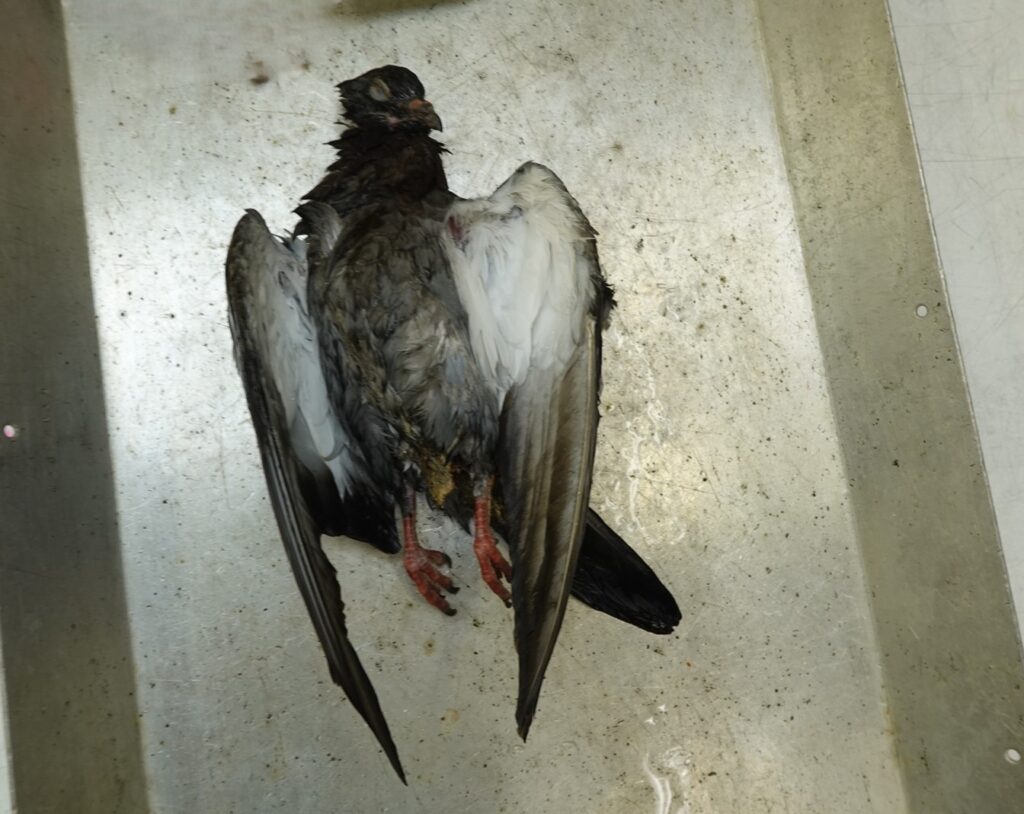
The DWHC receives reports from multiple areas across the Netherlands of pigeons with the same clinical symptoms as the ones from Groningen. We have not previously found Newcastle disease to be widespread. Dead pigeons from various areas have been collected for post-mortem investigation. At present, pigeons from the Limburg, South-Holland, and Amsterdam are being tested for Newcastle disease, among other disease. These animals are being fully pathologically examined. As soon as the results are available, we will publish them on our website.
Newcastle disease is a virus for which pigeons are the natural host. The virus is shed by an infected bird via the respiratory and gastrointestinal tracts through body fluids such as saliva and feces. The virus is stable in the environment and can remain infectious for several weeks.
The most common clinical signs are apathy, green watery or bloody diarrhea, torticollis (twisting of the head and neck), ataxia (loss of balance), and wing paralysis. Infection during molting can also affect feather development, leading to brittle or deformed feathers. Human exposure to the virus can sometimes cause mild conjunctivitis (inflammation of the mucous membrane of the eye), which usually resolves without treatment.
Visit our disease page for more information about this disease.