
Pathogen
West Nile virus (WNV) causes the disease West Nile Fever (WNF). It is an RNA arbovirus and belongs to the genus Flavirus in the family Flaviviridae. There are different lineages of WNV described, of which lineage 1 and lineage 2 are associated with disease in humans. The virus is for the first time isolated in 1937 in the West Nile district in Uganda (1).
Susceptible species
West Nile virus has a broad variety of bird species as host. In nature WNV is in an enzootic cycle between mosquitoes and birds, but it can also infect and cause disease in humans, other mammals and reptiles.
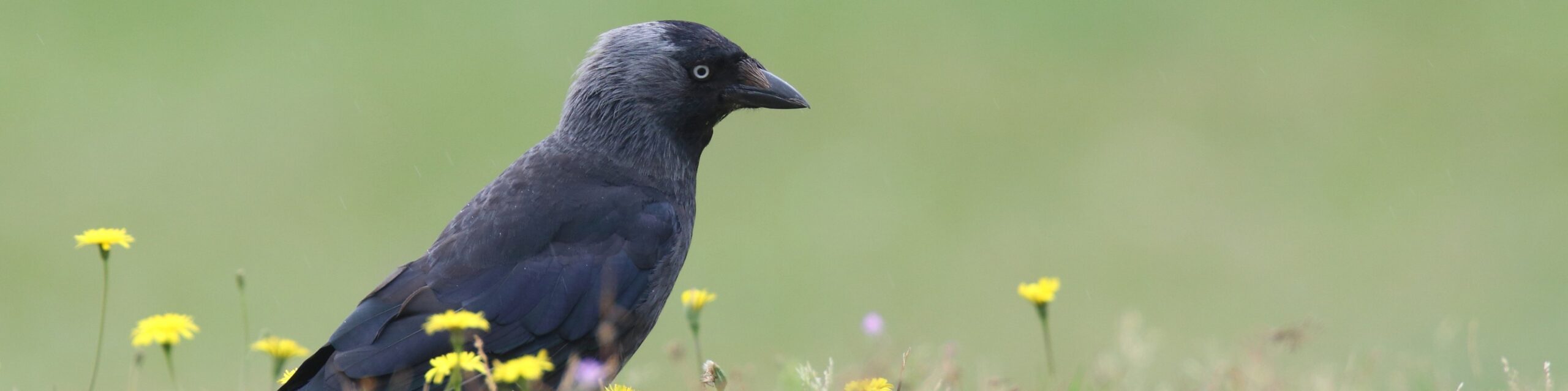
Birds serve as reservoir for WNV. The WNV can be fatal to a variety of bird species, such as Sphenisciformes (pinguins), Passeriformes (passerine), Gaviiformes (such as loons or divers), Podicipediformes (grebes) en Pelecaniformes. In a few sporadic instances the great cormoran are reported. Also a big variety of birds of prey are sensitive to an infection with WNV, such as Accipitridae (hawks, eagles, kites, vultures), Strigiformes (owls), Falconidae (falcons and caracaras) en Cathartidae (condors) (2). The disease is also detected in Corvids (3). Even though many bird species can be infected, most birds survive, but especially crows and western jackdaws frequently die of infection
Mammals are considered as dead-end host, because they do not develop high levels of virus in their bloodstream (viraemia) (4). Amongst mammals WNV causes disease mainly in horses (5).
Sources
- David S, Abraham AM. Epidemiological and clinical aspects on West Nile virus, a globally emerging pathogen. Infectious Diseases (London, England). 2016;48(8):571-86.
- Stidworthy MF, Denk D. Chapter 27 – Sphenisciformes, Gaviiformes, Podicipediformes, Procellariiformes, and Pelecaniformes. In: Terio KA, McAloose D, Leger JS, editors. Pathology of Wildlife and Zoo Animals: Academic Press; 2018. p. 653-86.
- Trupkiewicz J, Garner MM, Juan-Sallés C. Chapter 33 – Passeriformes, Caprimulgiformes, Coraciiformes, Piciformes, Bucerotiformes, and Apodiformes. In: Terio KA, McAloose D, Leger JS, editors. Pathology of Wildlife and Zoo Animals: Academic Press; 2018. p. 799-823.
- Suthar MS, Diamond MS, Gale Jr M. West Nile virus infection and immunity. Nature Reviews Microbiology. 2013;11:115.
- Spickler AR. West Nile Virus. http://www.cfsph.iastate.edu/Factsheets/pdfs/west_nile_fever.pdf. 2013.
Research results
No researchresults found.
Projects
No projects found.
Other posts
- West Nile virus found in wild Western Jackdaws in 2025 (20/03/2026)
- NCOH: West Nile Virus found in the Netherlands (15/10/2020)
Publications
No publications found.