

In late May 2026, a young female red deer was found in National Park De Hoge Veluwe. The person reporting the sighting immediately noticed that the eyes were not visible. The animal was collected and sent to the DWHC for post-mortem examination. The deer was in moderate physical condition, with a normal amount of muscle and fat tissue.
Both of the animal’s eyes were not developed. The crossing of the optic nerves in the brain (optic chiasm) was also missing. These abnormalities were present before birth. Due to the absence of both the eyes and the connection of the optic nerves, the animal was completely blind. The precise cause of these abnormalities could not be determined. We therefore do not know whether this is a hereditary defect or if it is caused by something else.
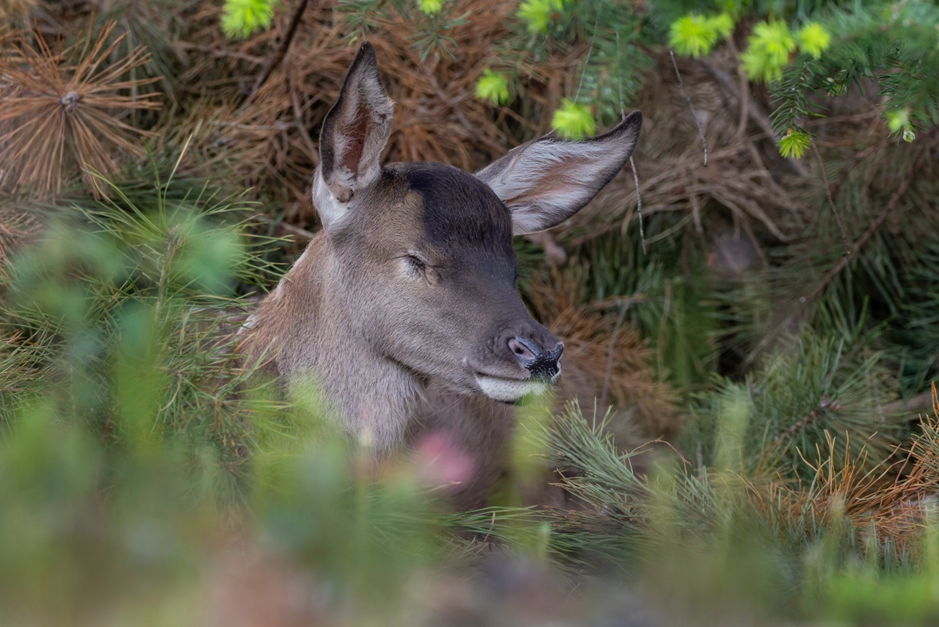
The red deer with undeveloped eyes. Photographer: ©Herwin Jan Steehouder
Blindness in the wild
Blindness poses a major problem for a wild animal. It has a significant impact on survival, as the animal finds it more difficult to find food, has poorer orientation, and is less able to perceive danger, such as predators or traffic. Although many animal species use their hearing and sense of smell to compensate for some of the blindness, this remains a major disadvantage in the wild.