

The RSPB (Royal Society for the Protection of Birds) has issued updated advice to better protect garden birds against diseases such as trichomoniasis, also known as frounce. This disease is caused by the Trichomonas parasite. In Dutch the disease is called ‘Yellow’ (Geel) because this parasite can cause yellowish-looking lesions in the pharynx, esophagus, and crop. The lesions make it difficult for the bird to swallow, and saliva and regurgitated food containing the parasite can come out of the beak. The parasite can then be transmitted directly to other birds, or indirectly via food and water. This can lead to outbreaks around feeding areas where many birds congregate. Some species, such as the greenfinch, may have declined in numbers partly due to this disease (1).
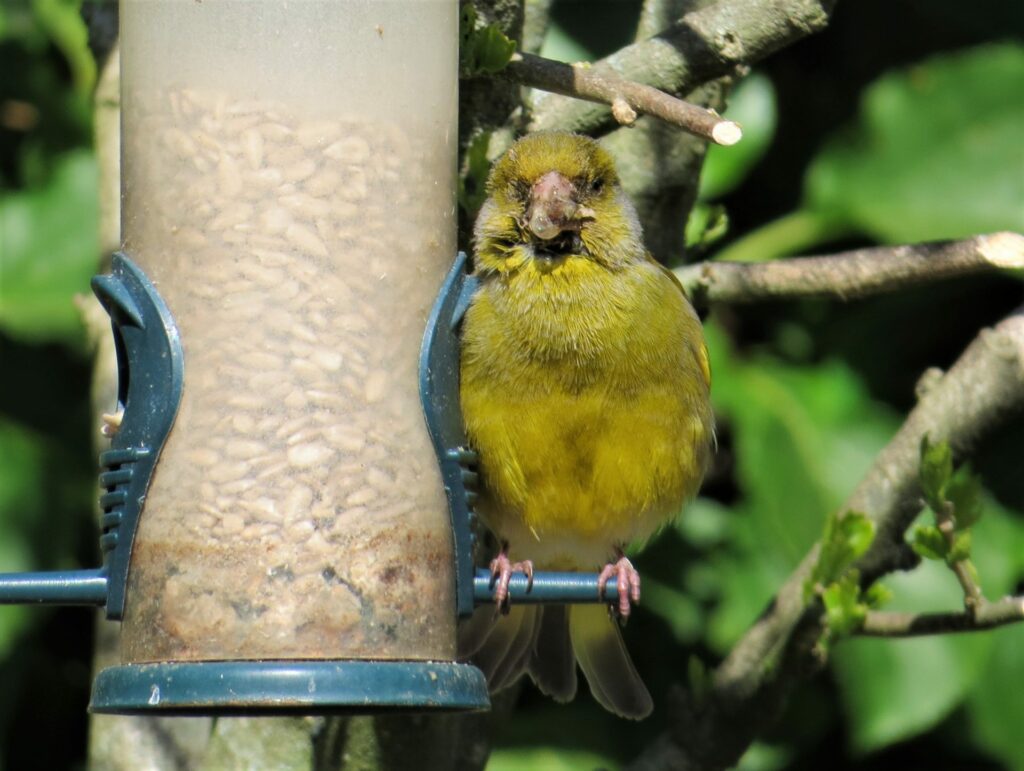
Greenfinches
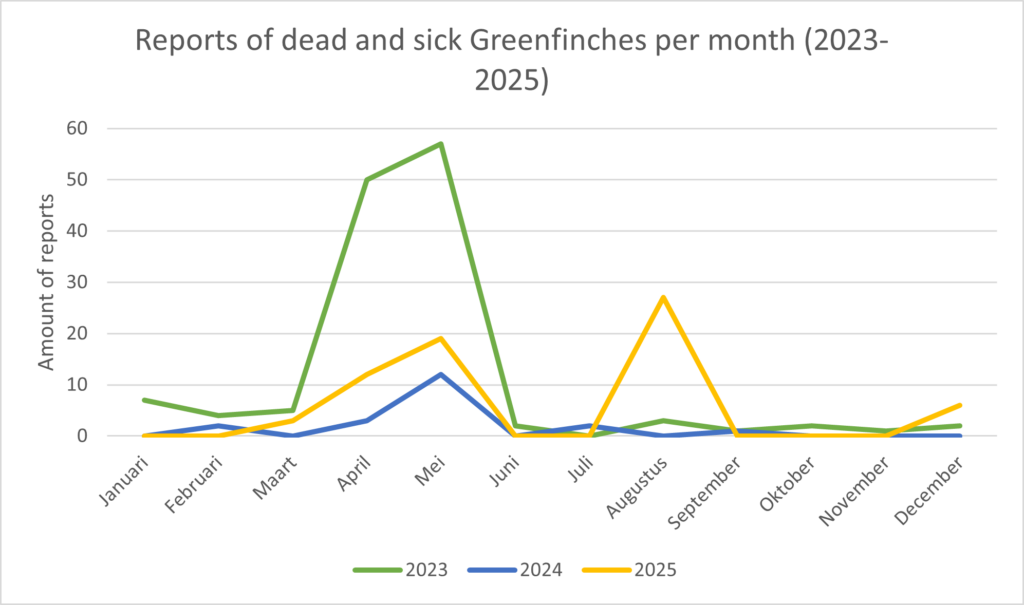
At the DWHC, we are seeing an increase in reports of dead and sick Greenfinches in the months of April and May (see figure below). In 2026, we have so far confirmed the disease frounce in one Greenfinch and one Eurasian Collared Dove. To closely monitor the spread and occurrence of this disease, we would like to collect more Greenfinches and other finches for pathological examination in the months of April and May. In addition, we are always looking for photos of wild animals, including Greenfinches, both sick and healthy, to use for our reports and educational purposes. These can be sent to dwhc@uu.nl.
Limiting the spread of disease among garden birds
The most important message from the RSPB is that you must feed birds in a conscious and hygienic manner, with the season playing a key role. Once the harsh winter months are over, it is recommended not to provide seeds and peanuts, as this attracts many birds at once and thus increases the risk of infection. During these months, you may offer small amounts of other food, such as mealworms or fat products.
Additionally, hygiene is essential to keep birds healthy. Feeding stations and water bowls must be cleaned regularly, and it is important to move them occasionally. Do not provide more food than birds can eat within one to two days, so that no leftovers remain where pathogens can accumulate. It is also recommended to avoid flat feeding tables, as these become soiled more quickly. Furthermore, ensure that the food remains dry, change the water daily, and try to spread out the birds by feeding in multiple locations. Finally, the RSPB emphasizes that you can also help birds by making your garden more natural, with plants that provide food such as seeds and insects. This makes birds less dependent on supplementary feeding and reduces the risk of disease spread.
Reference
- Rijks, J. M., Laumen, A. A., Slaterus, R., Stahl, J., Gröne, A., & Kik, M. L. (2019). Trichomonosis in greenfinches (Chloris chloris) in the Netherlands 2009–2017: A concealed threat. Frontiers in Veterinary Science, 6, 425. https://doi.org/10.3389/fvets.2019.00425