
Pathogen
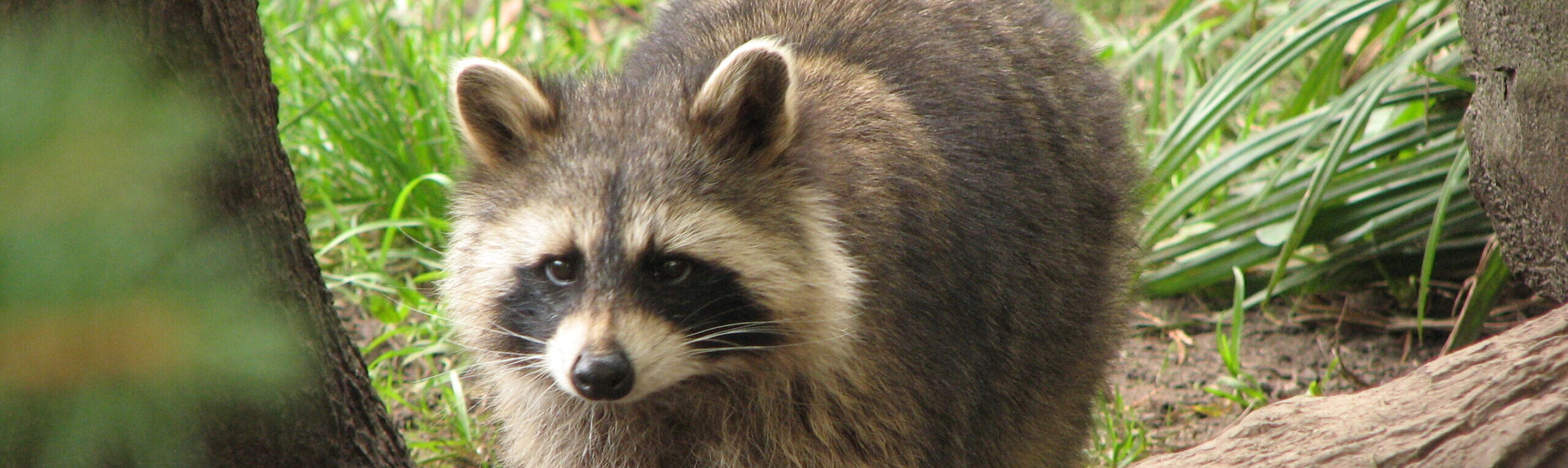
The raccoon roundworm Baylisascaris procyonis is a roundworm found in the intestines of raccoons and other raccoon-like animals.
The life cycle of the raccoon roundworm can proceed with or without intermediate hosts; see also the information under ‘susceptible species’.
In the literature regarding the life cycle of roundworms, the term ‘latent host’ is used instead of ‘final host’, and the term ‘paratenic host’ for ‘intermediate host’. Paratenic hosts function merely as vectors and are therefore essentially ‘superfluous’ intermediate hosts. The cycle can also be completed without this particular type of intermediate host, as is the case with the raccoon roundworm.
Susceptible species
Raccoons and other raccoon-like animals are the natural definitive hosts.
The raccoon is the natural definitive host for this roundworm, but in America, the dog is also increasingly acting as a definitive host. In the definitive host, the roundworm can develop into the adult stage that excretes eggs. An infected raccoon can excrete millions of eggs per day, which, under favorable, moist conditions, can remain infectious for years. The eggs are invisible to the naked eye. In the eggs excreted with the feces, the larvae develop into the infectious second larval stage. This stage (egg containing infectious larvae) is referred to as an embryonated egg.
It is known that more than 100 animal species, both mammals and birds, can be infected by embryonated eggs (egg containing infectious larvae) of the raccoon roundworm. Intermediate hosts are primarily small birds and mammals (particularly rodents) that become infected when foraging in the vicinity of raccoon latrines. Some animals even deliberately seek out raccoon latrines to eat the undigested seeds from the feces.
Signs in animals
Once ingested by the intermediate host, the larva crawls through the intestinal wall, subsequently moves to other locations in the body (the so-called larva migrans), and settles in the central nervous system (brain) and the eyes, among other places (Maas et al. 2014). Depending on their size and number, the larvae can cause serious problems, particularly in the brain, which can also be fatal.
Infection of animals
A raccoon can become infected in two ways: either by ingesting embryonic eggs or by eating infected intermediate hosts. In raccoons, an infection usually proceeds without health problems.
Infection of people
Humans can ingest roundworm eggs through contact with raccoon feces and/or eggs found on the fur.
Preventative measures
Pick up (dead) raccoons only with disposable gloves and avoid raccoon latrines. Because eggs can remain infectious for years, latrines constitute a significant, long-term source of infection.
Research results
No researchresults found.
Projects
No projects found.
Other posts
No news found.
Publications
No publications found.