
Pathogen
Aspergillosis is caused by a fungus from the genus Aspergillus. There are various Aspergillus species, of which especially A. fumigatus causes aspergillosis. The vast majority of Aspergillus species are saphrophytes: they live of organic material. These fungi are commonly found in soil. Decaying plant material, and on seeds and grains. Aspergillus species excrete mycotoxins. These play a rol in the pathogenicity of Aspergillus.
Susceptible species
Aspergillosis occurs in mammals, including humans, but it is mainly found in birds. The disease is a major cause of death in captive birds, and less frequently in wild birds. In soft corals (Grogonia species), Aspergillus sydowii can cause disease. In beehives, various Aspergilus species van weaken the bee colony. Infections with Aspergillus species have also been described in reptiles.
Signs in animals
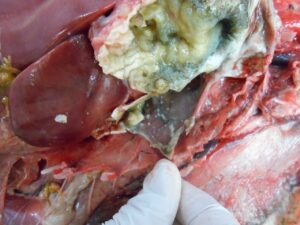
The fungus usually causes an infection of the respiratory tract and the lungs (mammals) and air sacs (birds), other organs are only sporadically affected. The symptoms therefore corresponds to respiratory and lung problems.
Infection of animals
Animals mainly become infected by inhaling the spores of the fungus. However, animals can also contract the fungus by eating contaminated food. Factors that play a role in whether or not (serious) illness develops include the number of spores an animal inhales, its overall condition, and whether there is a concurrent infection with other parasites and/or damage to the respiratory tract.
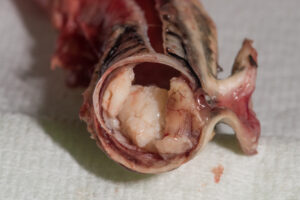
A warm, humid environment, poor ventilation, and prolonged storage of food are favourable conditions for increasing the number of spores in the air. This is also the reason why the disease is mainly observed in captive (water)birds. High mortality among wild birds has been described in birds that, for example, foraged on dumped, mouldy grain. In cases of mortality among trumpeter swans in America due to aspergillosis, damage to the trachea was found in 48% of cases. A possible explanation for the high number of trumpeter swans with tracheal damage is the complex anatomy of their trachea. Due to the long trachea and the many ‘loops’ in it, the airflow may be different, allowing the fungal spores to settle in a loop or in the syrinx (the vocal organ).
Symptoms in people
Further information on Aspergillosis in humans can be found on: https://www.rivm.nl/antimicrobiele-resistentie/brmo/schimmels/aspergillus-fumigatus-surveillance
Preventative measures
Do not feed animals moldy food, and do not feed birds moldy bread.
Sources
Beernaert, L. A., Pasmans, F., Van Waeyenberghe, L., Haesebrouck, F., & Martel, A. (2010). Aspergillus infections in birds: a review. Avian pathology : journal of the W.V.P.A, 39(5), 325–331. https://doi.org/10.1080/03079457.2010.506210
Cadena, J., Thompson, G. R., 3rd, & Patterson, T. F. (2021). Aspergillosis: Epidemiology, Diagnosis, and Treatment. Infectious disease clinics of North America, 35(2), 415–434. https://doi.org/10.1016/j.idc.2021.03.008
Seyedmousavi, S., Guillot, J., Arné, P., de Hoog, G. S., Mouton, J. W., Melchers, W. J., & Verweij, P. E. (2015). Aspergillus and aspergilloses in wild and domestic animals: a global health concern with parallels to human disease. Medical mycology, 53(8), 765–797. https://doi.org/10.1093/mmy/myv067
Souza, M. J., & Degernes, L. A. (2005). Mortality due to aspergillosis in wild swans in northwest Washington State, 2000–02. Journal of Avian Medicine and Surgery, 19(2), 98-106. https://doi.org/10.1647/2004-001
Research results
- Fungal respiratory infection cause of death in Mute swan (14/03/2018)
- Avian pox in a sparrow (13/02/2017)
Projects
No projects found.
Other posts
No news found.
Publications
No publications found.