
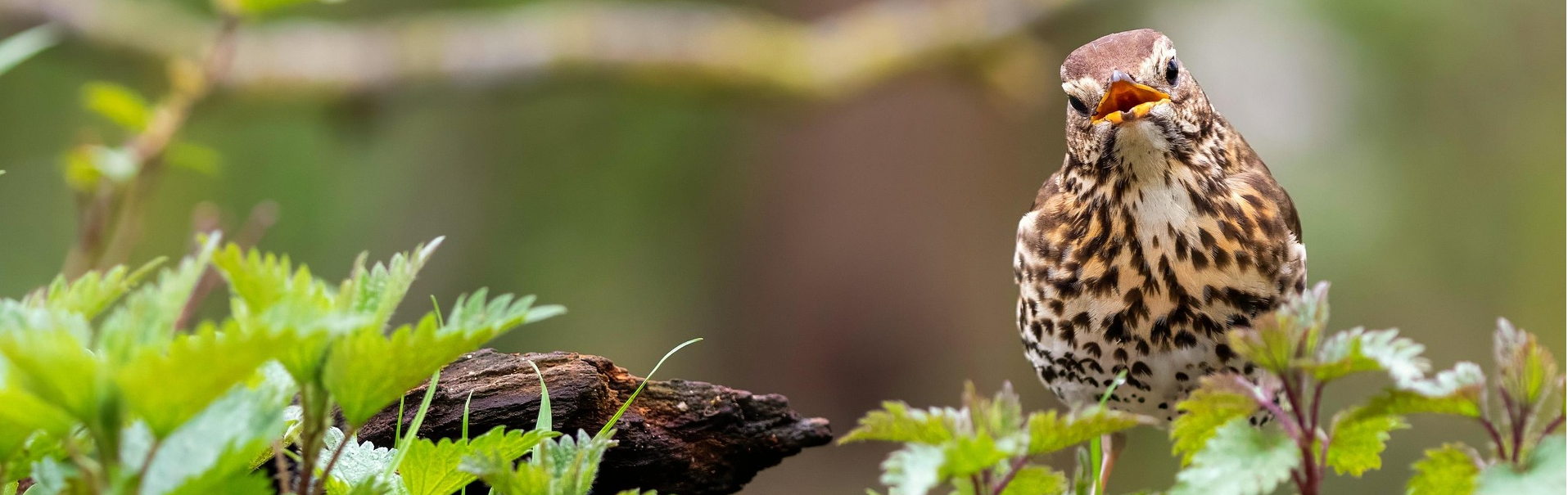
West Nile virus (WNV) has been confirmed in a Dutch Song Thrush (West Nile virus infection confirmed in horse and bird | NVWA). The bird was caught and sampled in the province of Utrecht in late July. This capture was part of wild bird monitoring by Erasmus MC. It concerned a young bird that could not have been infected through migration. Genetic analysis shows that the West Nile virus from this bird is genetically closely related to the virus found in mosquitoes and dead birds in the Netherlands in 2025.
In addition to the WNV infection in the song thrush, the virus has also been detected in a horse in the province of South-Holland (West Nile virus confirmed in Dutch horse | WUR).
WNV is a zoonosis. This means that it can be transmitted from animals to humans. Infection with WNV occurs via a mosquito bite. Many people with an infection experience no symptoms, while some develop mild flu-like symptoms. Occasionally, someone becomes seriously ill (1%). For more information about WNV and humans, visit the RIVM website. View the latest update on WNV in (wild) animals and humans here.
Please keep reporting
To map the spread and prevalence of this disease, we would like to collect more corvids and other songbirds for pathological examination.