
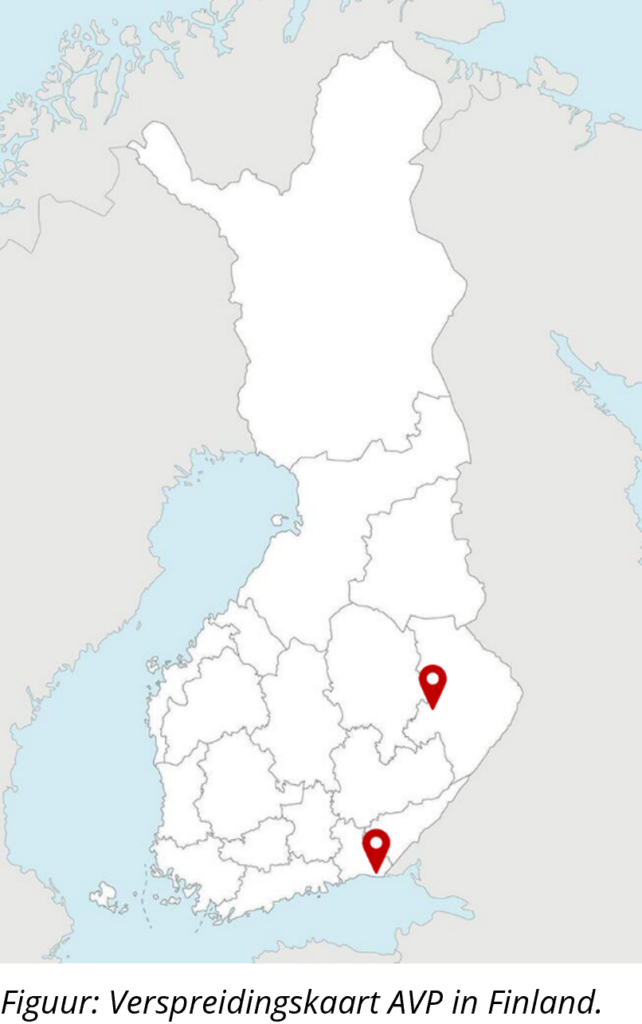
Finland is dealing with African Swine Fever (ASF) for the first time. The disease was confirmed in late July in three dead wild boars in Virolahti, in southern Finland (see figure). The location is less than two kilometers from the Russian border. On August 6 and 7, infected carcasses were found outside the original infection area. Consequently, the restricted zone has been expanded. By now, 14 infected dead wild boars have been found. These involve carcasses and skeletal remains of adult wild boars and piglets. The Finnish authorities are actively searching for dead wild boars and removing carcasses. 400 volunteers have been trained to assist with this.
The virus variant found in Finland is also present in the Baltic states and Central Europe. The virus likely entered the country from Russia, but this has not yet been proven.
For wild boars, ASF is a serious disease that can spread easily. The outbreak poses a major risk to the pig farming industry. If the virus would reach farmed pigs, this could lead to many sick and dead animals, trade restrictions, and economic damage.
Therefore, the focus in the coming period will be primarily on whether the virus spreads further among the wild boar population and whether new infections are found outside the current known area.
ASF in the Netherlands
ASF has not been found in the wild boar population in the Netherlands. The NVWA routinely conducts a risk assessment in the event of an outbreak of a notifiable animal disease, such as ASF. It has been concluded that there have been no high-risk contacts between the Netherlands and Finland. Read more about the role of the NVWA regarding ASF on their website.