

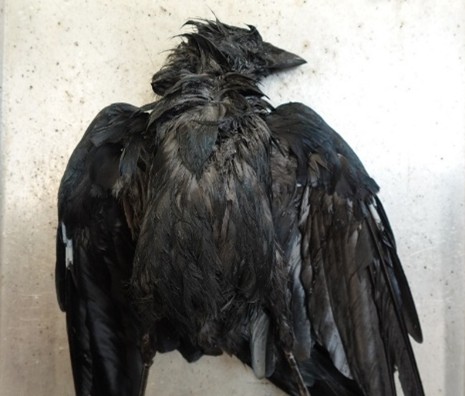
The West Nile virus (WNV) has been found in dead wild birds for the first time in the Netherlands during the 2025 incident study (2/115; 1.7%). The two positive birds were both Western Jackdaws (2/6): one from Rijswijk and one from Tilburg (province of North Brabant), which were found dead in August and September, respectively. During the pathological examination, we observed that both birds were chronically severely emaciated with parasitic infections and an atypical appearance. Samples were taken from the animals and sent to Erasmus MC, where they tested positive for West Nile Virus.
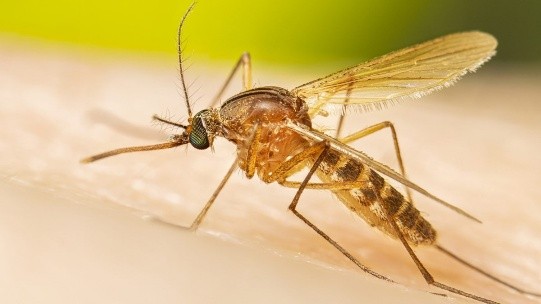
In early October 2025, WNV was also found in a mosquito pool and a horse in the province of South Holland. An infected animal cannot transmit the virus to humans or other animals; a mosquito is always required for transmission. With these infections in mosquitoes, a horse, and the two wild Western Jackdaws, we can conclude that WNV was circulating in the Netherlands in 2025.
In Europe, besides the Netherlands, outbreaks in equids were also reported in Italy (87), France (57), Spain (12), Croatia (11), Hungary (7), Germany (5), Greece (5), and Austria (1) in 2025. Among birds, reports came mainly from Italy (330), followed by Germany (15), Spain (4), Belgium (3), Austria (2), France (2), Croatia (1), Cyprus (1), and Hungary (1). (1)
West Nile Virus
West Nile Virus is transmitted between mosquitoes and birds, which form the natural reservoir. Many bird species can become infected, including songbirds, birds of prey, and corvids (2). Crows and Jackdaws, in particular, become ill or die from the infection (3).
Mammals also become infected, but usually do not play a role in the spread because the virus is only present in their blood for a short time. The disease is mainly seen in horses and occasionally in other domesticated animals, such as dogs and cats, or wild mammals, such as wild boars and roe deer (4). In the Netherlands, the DWHC monitors West Nile virus in both wild birds and mammals in cooperation with Erasmus MC. To date, no positive wild mammal has been found in the Netherlands.
The virus primarily affects the central nervous system and other organs, such as the liver, spleen, kidneys, and heart. In birds, the disease often manifests as coordination problems, tremors, muscle weakness, seizures, and abnormal head movements. Hawks and owls can become visually impaired or blind. In addition, general symptoms such as lethargy, reduced appetite, and dehydration occur. However, sometimes birds show no symptoms at all, despite being infected.
WNV is a zoonosis, which means it can be transmitted to humans. In the case of this virus, infection occurs via a mosquito bite. Many people with an infection experience no symptoms from this, while some develop mild flu-like symptoms. Occasionally, someone becomes seriously ill (1%). For more information about WNV and humans, visit the RIVM website.
Read more about this disease in wild animals: https://dwhc.nl/en/ziekten/west-nile-virus/
Read more about WNV in the mosquito pool and horses in 2025 on the RIVM website: https://www.rivm.nl/en/west-nile-fever/current-figures-on-west-nile-fever and the NVWA website: https://www.nvwa.nl/onderwerpen/dier/westnijlvirus (Dutch).
Sources
- European Centre for Disease Prevention and Control. (2025). Surveillance of West Nile virus infections in humans and animals in Europe: Monthly updates. Geraadpleegd op 20 maart 2026, van https://www.ecdc.europa.eu/en/infectious-disease-topics/west-nile-virus-infection/surveillance-and-disease-data/monthly-updates
- Trupkiewicz, J., Garner, M. M., & Juan-Sallés, C. (2018). Passeriformes, caprimulgiformes, coraciiforms, piciformes, bucerotiformes, and apodiformes. Pathology of wildlife and zoo animals, 799-823.
- Centers for Disease Control and Prevention. (z.d.). Dead birds and West Nile virus (West Nile virus). Centers for Disease Control and Prevention. Geraadpleegd op 17 maart 2026, van https://www.cdc.gov/west-nile-virus/causes/west-nile-virus-dead-birds.html
- Veljović, L., Paunović, M., Glišić, D., Šolaja, S., Zurovac Sapundžić, Z., Maletić, J., Milovanović, B., & Milićević, V. (2025). Wild Mammals as Sentinels for West Nile Virus Circulation: Evidence from Serbia. Pathogens, 14(11), 1167. https://doi.org/10.3390/pathogens14111167